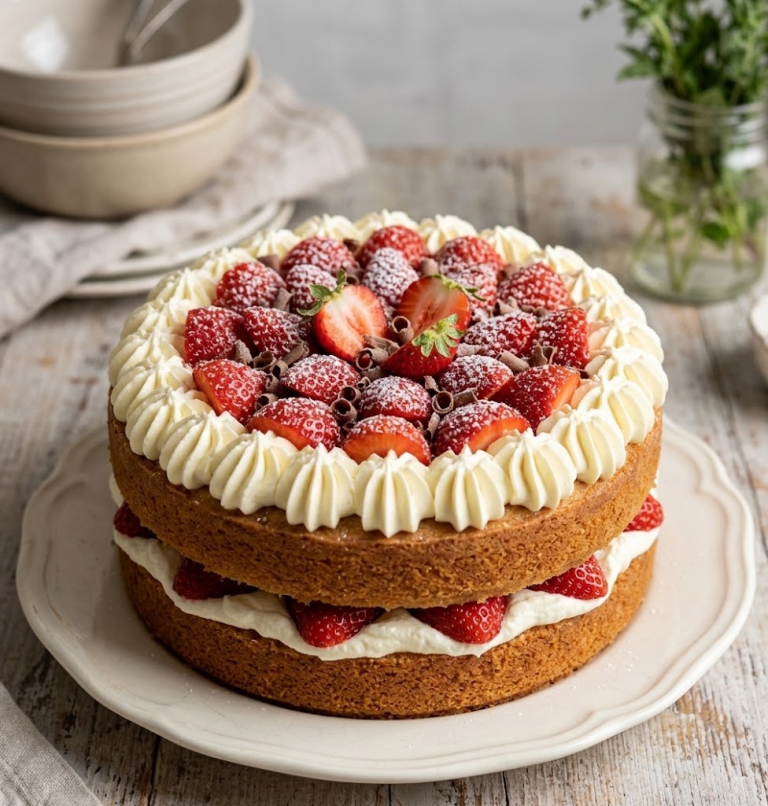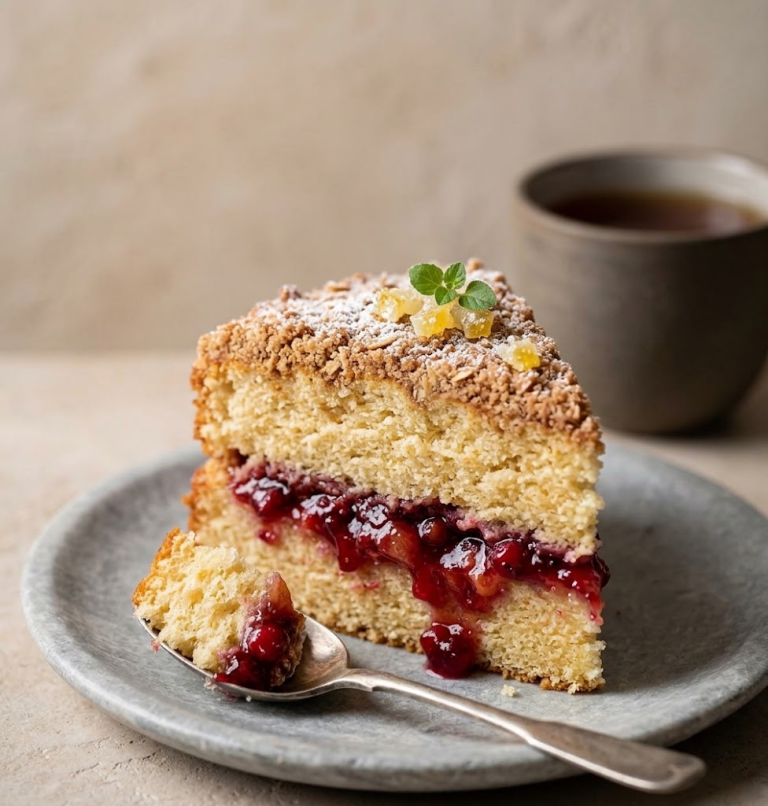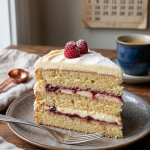

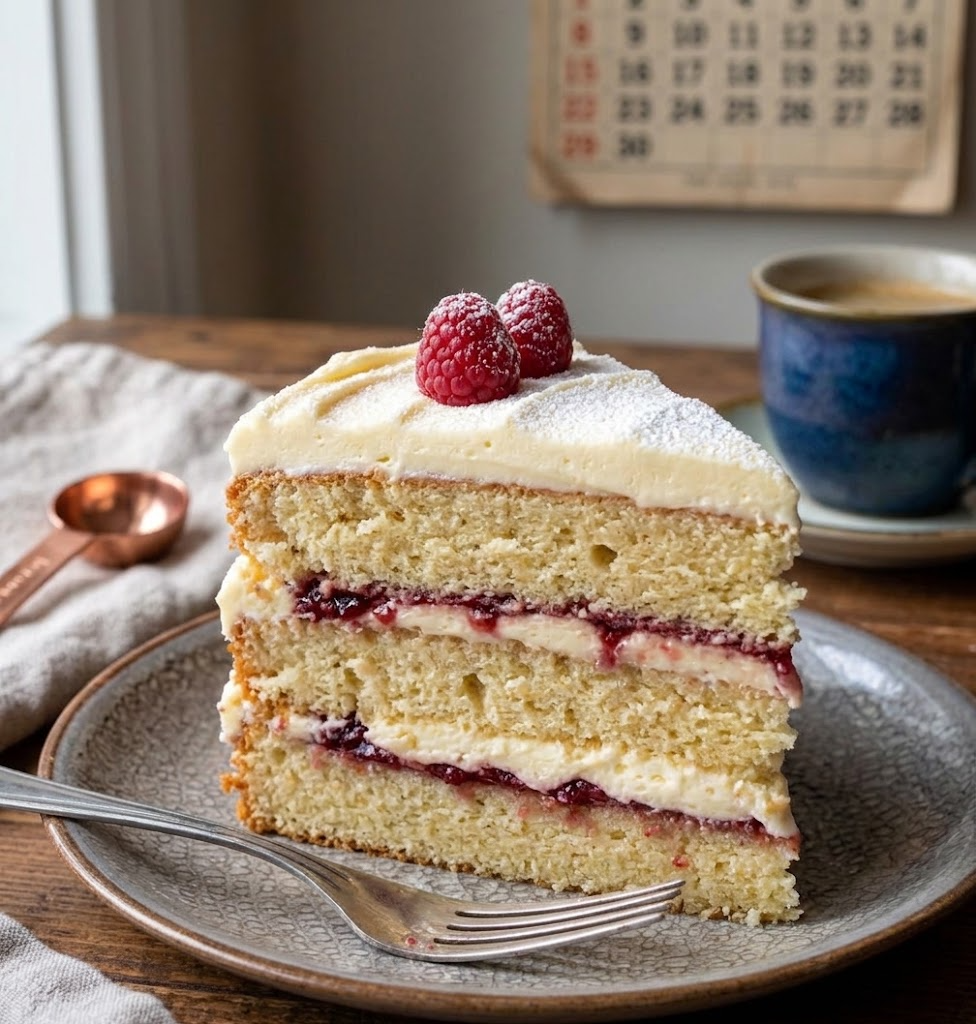
This classic Victoria sponge is everything you want from a traditional British cake: light, buttery layers with a tender crumb, sandwiched with sweet strawberry jam and a smooth vanilla buttercream. It tastes rich but not heavy, and it slices beautifully for afternoon tea, birthdays, or a simple Sunday treat. The method is straightforward (Mary’s famous all-in-one mixing), so it’s very achievable for beginner bakers with a couple of simple checks. From start to finish, allow about 1 hour 15 minutes, including cooling and assembling time.
Ingredients
For the sponge cakes
- Butter, for greasing the tins
- Baking parchment, for lining
- 225g unsalted butter, softened
- 225g caster sugar
- 4 large eggs
- 225g self-raising flour
- 2 tsp baking powder
- 2 tbsp milk
- 1 tsp vanilla extract (optional, but lovely)
For the buttercream
- 150g unsalted butter, softened
- 300g icing sugar, sifted
- 1 to 2 tbsp milk (as needed)
- 1 tsp vanilla extract (optional)
For filling and finishing
- 4 to 5 tbsp strawberry jam (seedless or seeded, your choice)
- Icing sugar, for dusting
How to Make Victoria Sponge with Buttercream
Oven preparation
- Prepare the oven: Preheat the oven to 200°C or 180°C fan. Place a shelf in the middle so the cakes bake evenly.
- Prepare the tins: Grease two 20cm (8-inch) sandwich tins and line the bases with baking parchment. A lined base makes turning out completely stress-free.
Mixing the sponge
- Add everything to the bowl: Place the softened butter, caster sugar, eggs, self-raising flour, baking powder, milk, and vanilla (if using) into a large mixing bowl.
- Beat until smooth: Using an electric mixer (or a wooden spoon with determination), beat for 1 to 2 minutes until pale, creamy, and fully combined. Stop once to scrape down the bowl so there are no buttery pockets hiding at the bottom.
- Divide evenly: Spoon the batter into the prepared tins and level the tops. If you have scales handy, weighing the batter into the tins is the easiest way to get neat, even layers.
Baking
- Bake: Bake for 20 to 25 minutes, until golden and springy to the touch. A skewer inserted into the centre should come out clean.
- Do not peek too early: Keep the oven door closed for at least the first 18 to 20 minutes so the sponges rise properly without sinking.
Cooling
- Cool briefly in the tins: Leave the cakes in their tins for 5 minutes to firm up.
- Turn out and cool completely: Run a knife around the edge, turn out onto a wire rack, peel off the parchment, and cool fully before filling. Warm sponge plus buttercream equals a slippery situation.
Making the buttercream and assembling
- Beat the butter: Beat the 150g softened butter for 1 minute until creamy and lighter in colour.
- Add icing sugar gradually: Add the sifted icing sugar in 2 to 3 additions, beating well each time. Start on low speed to avoid an icing sugar cloud.
- Adjust the texture: Beat in 1 to 2 tablespoons of milk, just until the buttercream is smooth and spreadable. Add vanilla if using.
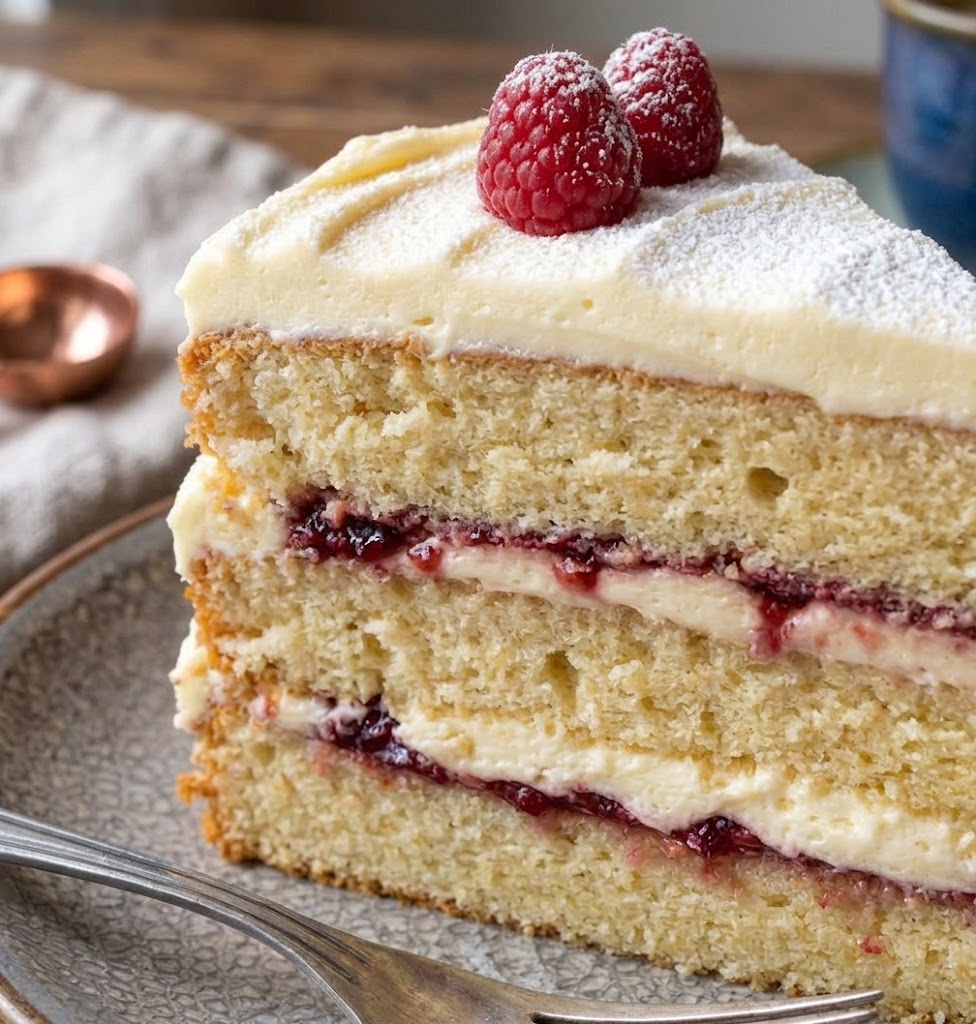
- Fill: Spread the jam over one sponge layer. Spread buttercream over the other sponge (or directly over the jam if you prefer), then sandwich together.
- Finish: Dust the top with a light snowfall of icing sugar, then slice with a sharp serrated knife.
Tips
Why did my Victoria sponge sink in the middle?
This usually comes down to the oven door being opened too early, underbaking, or overbeating the mixture. Bake until the centre springs back when lightly pressed and a skewer comes out clean. If your oven runs hot, a slightly lower temperature (170°C fan) can help the cake rise more evenly.
How do I get two perfectly even layers?
Weigh the batter into each tin, then level the top with the back of a spoon. Also make sure the tins are the same size and material, and sit side by side on the same shelf.
My buttercream is too stiff. How do I fix it?
Add milk a teaspoon at a time while beating until it becomes spreadable. If it’s still stubborn, letting it sit at room temperature for 10 minutes can soften it up, then beat again.
How do I stop the sponge from tasting dry?
Measure carefully and do not overbake. Self-raising flour and properly softened butter help keep the crumb tender. If you are in the habit of “just another five minutes,” resist it and test with a skewer instead.
Serving Suggestions
- Serve with a pot of strong tea, Earl Grey, or English Breakfast.
- Add fresh strawberries or raspberries on the side for a simple upgrade.
- For a celebration, top with a few piped rosettes of buttercream and berries.
- Pair with lightly sweetened whipped cream for those who want extra richness.
Storage
Room temperature
Store the assembled cake in an airtight container at cool room temperature for up to 2 days. If your kitchen is warm, the buttercream will soften more quickly, so keep it in the coolest spot you have.
Refrigerator
Refrigerate for up to 4 days in a sealed container. For the best texture, bring slices to room temperature for 30 to 45 minutes before serving so the sponge softens and the buttercream becomes creamy again.
Freezing
For best results, freeze the sponge layers unfilled. Wrap each cooled layer tightly in cling film, then foil, and freeze for up to 3 months. Defrost at room temperature (still wrapped) before filling. You can freeze filled slices, but the jam can weep slightly as it thaws.
Nutrition
- Calories: 465 kcal
- Carbohydrates: 55 g
- Protein: 5 g
- Fat: 25 g
- Saturated Fat: 15 g
- Sodium: 220 mg
Nutrition values are estimates and will vary depending on the ingredients and brands you use.
FAQs
Can I make this Victoria sponge the day before?
Yes. Bake the sponges, cool completely, and store airtight overnight. For the freshest finish, assemble with jam and buttercream on the day you plan to serve, or assemble the night before and bring to room temperature before slicing.
What size cake tins should I use for a classic Victoria sponge?
Two 20cm (8-inch) sandwich tins are ideal for this recipe. If you use 18cm tins, the layers will be thicker and may need a few extra minutes in the oven.
Can I use plain flour instead of self-raising flour?
Yes. Replace the self-raising flour with the same weight of plain flour and increase the baking powder to 3 teaspoons total. Sift well to keep the sponge light.
Can I swap the buttercream for whipped cream?
Absolutely. Replace the buttercream with 250ml double cream whipped to soft peaks (sweeten with 1–2 tablespoons icing sugar if you like). Keep the cake refrigerated if using cream and serve within 24 hours for the best texture.
Victoria Sponge with Buttercream (Mary Berry-Style)
Course: DessertCuisine: BritishDifficulty: Easy12
slices20
minutes22
minutes75
minutes465
kcal42
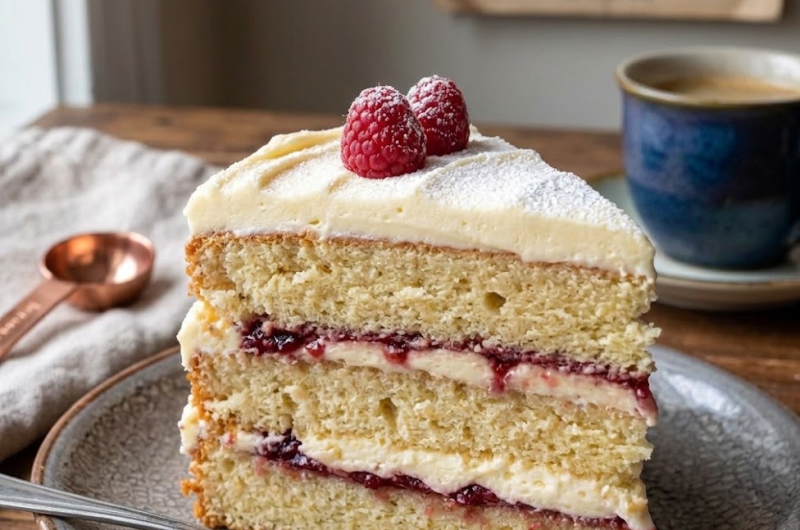
minutesLight, fluffy Victoria sponge layers filled with strawberry jam and a smooth vanilla buttercream. A classic British cake that’s simple to make and always impressive.
Ingredients
Butter, for greasing tins
Baking parchment, for lining
225g unsalted butter, softened
225g caster sugar
4 large eggs
225g self-raising flour
2 tsp baking powder
2 tbsp milk
1 tsp vanilla extract (optional)
150g unsalted butter, softened (for buttercream)
300g icing sugar, sifted (for buttercream)
1–2 tbsp milk (for buttercream)
4–5 tbsp strawberry jam
Icing sugar, for dusting
Directions
- Preheat the oven to 200°C (180°C fan). Grease and line two 20cm (8-inch) sandwich tins.
- Add 225g softened butter, caster sugar, eggs, self-raising flour, baking powder, milk, and vanilla (if using) to a large bowl.
- Beat for 1–2 minutes until pale, smooth, and well combined. Scrape down the bowl once.
- Divide evenly between the tins and level the tops.
- Bake for 20–25 minutes until golden and springy, and a skewer comes out clean.
- Cool in tins for 5 minutes, then turn out onto a wire rack and cool completely.
- For the buttercream, beat 150g softened butter until creamy, then gradually beat in sifted icing sugar. Add 1–2 tbsp milk as needed for a smooth, spreadable texture.
- Spread jam over one sponge. Spread buttercream over the other sponge (or over the jam layer if you prefer), then sandwich together.
- Dust the top with icing sugar, slice, and serve.
Notes
- Use truly softened butter (not melted) for the best rise and a fine crumb.
- Weighing your batter into the tins helps the layers bake evenly.
- Let the sponges cool completely before filling, or the buttercream will melt.