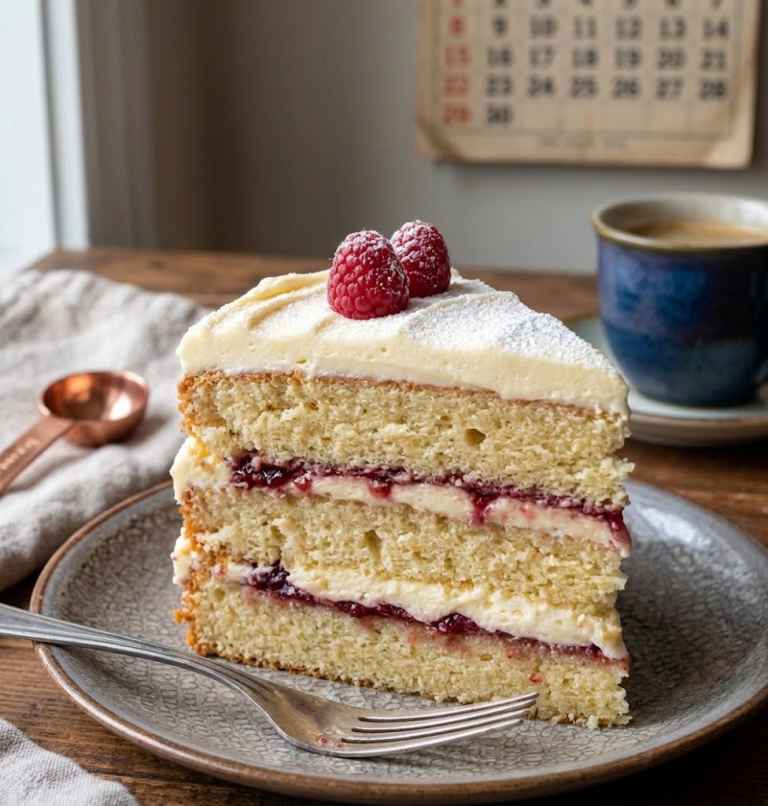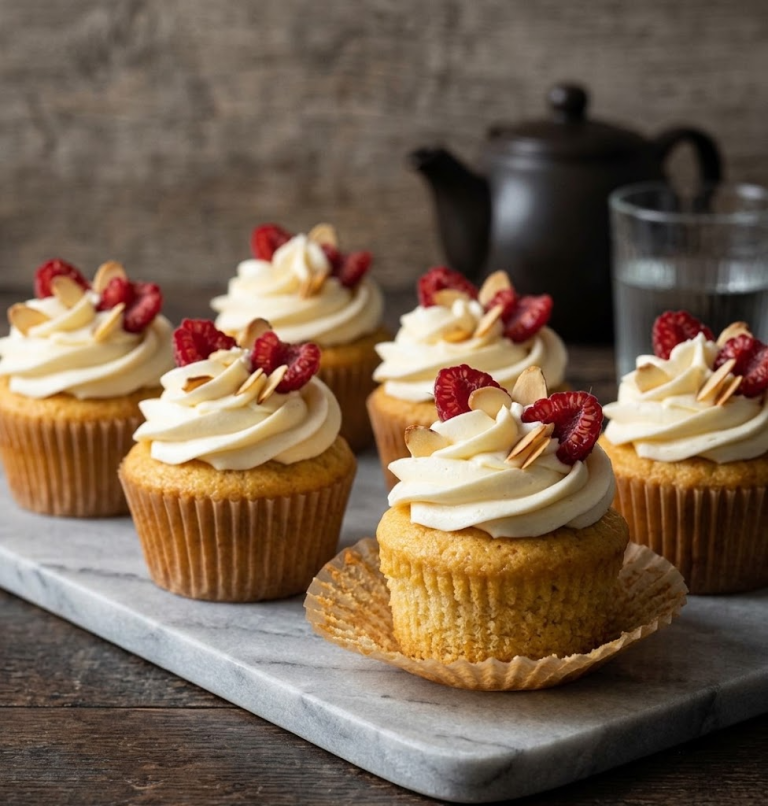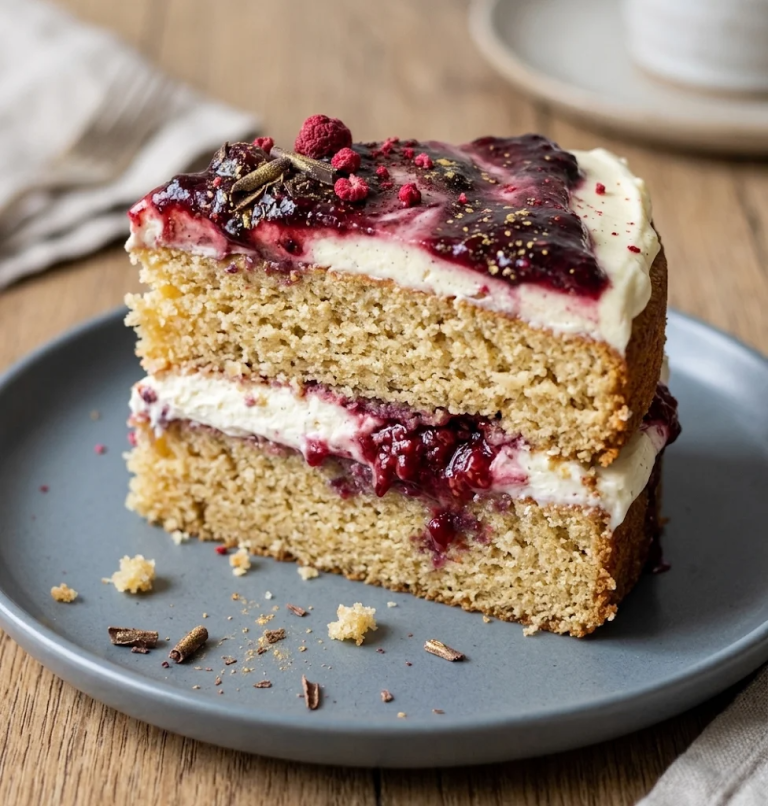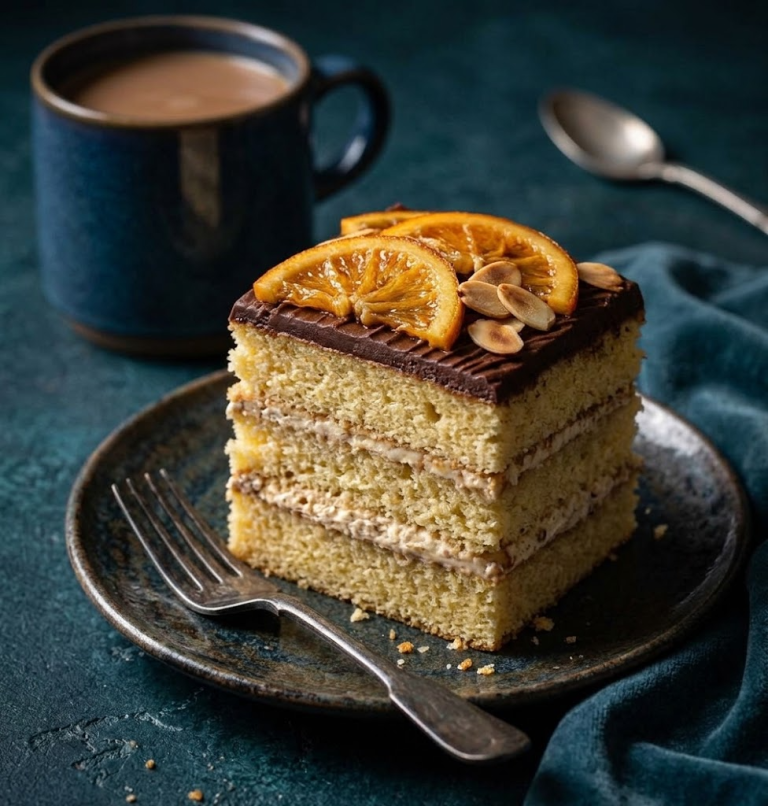

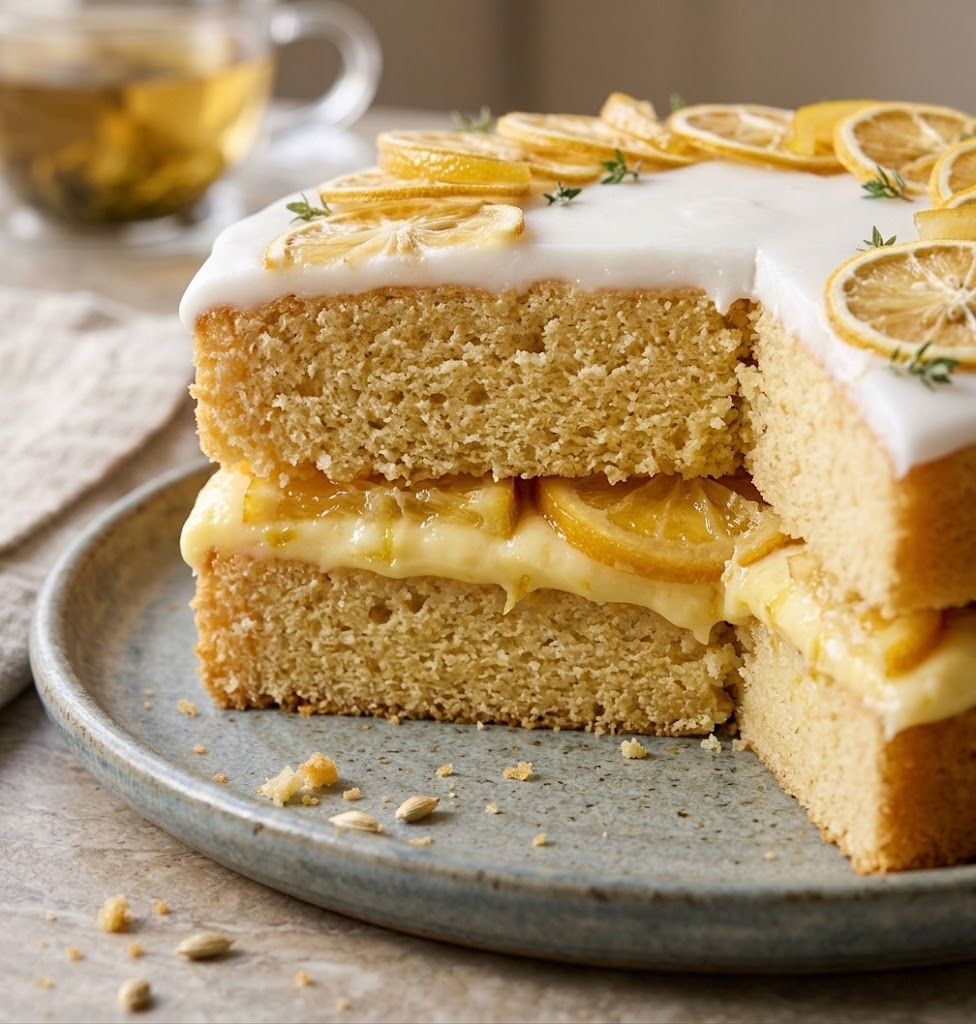
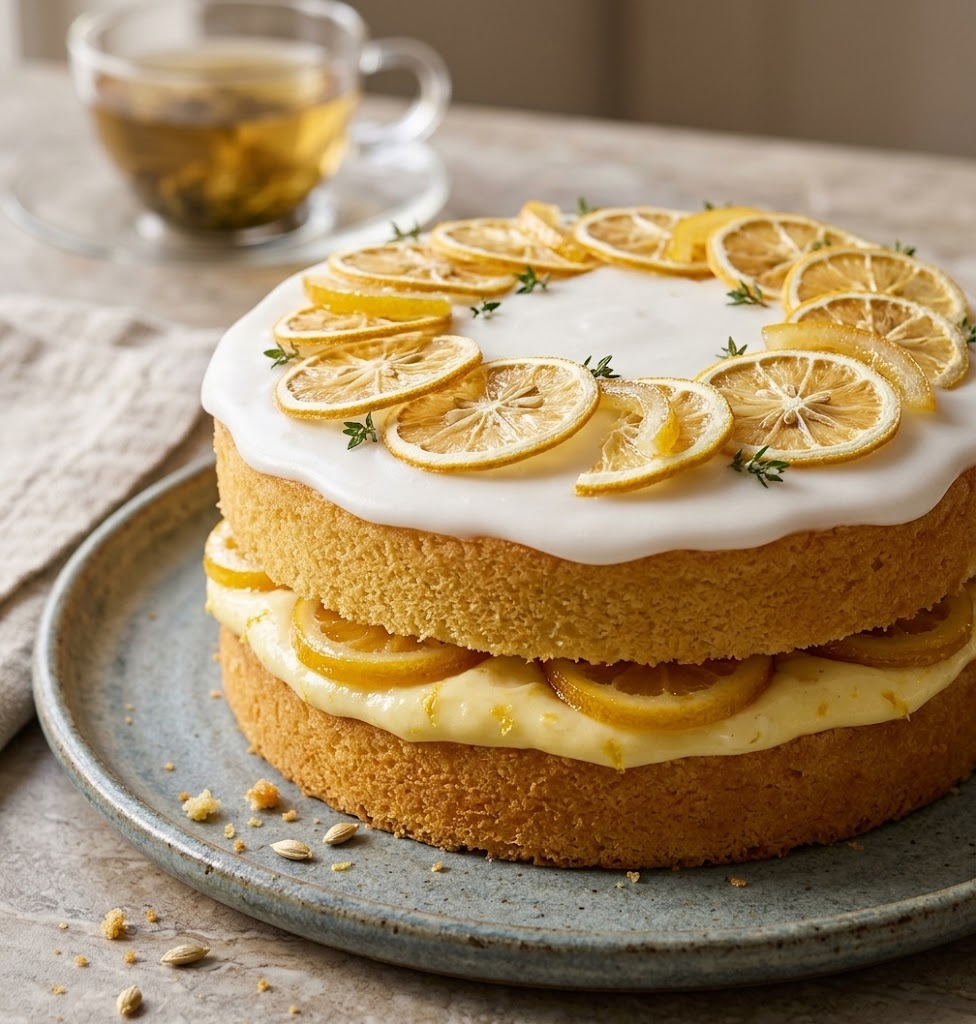
This Mary Berry-inspired lemon Victoria sponge pairs two soft, golden sponge layers with tangy lemon curd and freshly whipped cream. Lemon zest gives the cake a bright flavour without overpowering its buttery crumb. It is an easy bake for beginners, and you can have it ready to serve in about 90 minutes, including cooling time.
Ingredients
For the Lemon Sponge
- 225g unsalted butter, softened, plus extra for greasing
- 225g caster sugar
- 4 large eggs, at room temperature
- 225g self-raising flour
- 1 teaspoon baking powder
- Finely grated zest of 2 unwaxed lemons
- 2 tablespoons milk
For the Filling and Topping
- 150ml double cream, chilled
- 1 tablespoon icing sugar, plus 1 teaspoon for dusting
- 4 tablespoons lemon curd
Kitchen Equipment
- Two 20cm round sandwich tins
- Baking parchment
- Large mixing bowl and electric mixer
- Spatula and wire cooling rack
- Small sieve for dusting
How to Make Lemon Victoria Sponge
- Prepare the oven: Preheat the oven to 180°C conventional or 160°C fan. Grease two 20cm round sandwich tins and line their bases with baking parchment. Place a shelf near the middle of the oven.
- Mix the cake batter: Put the softened butter, caster sugar, eggs, self-raising flour, baking powder, lemon zest and milk in a large bowl. Beat with an electric mixer for 1 to 2 minutes, just until the batter is smooth and evenly combined. Scrape down the sides of the bowl as needed.
- Fill the tins: Divide the batter evenly between the prepared tins. Gently spread it to the edges and level the tops with a spatula.
- Bake the sponges: Bake for 20 to 25 minutes, until golden and springy to a light touch. A skewer inserted into the centre should come out clean. If needed, bake for another 2 to 3 minutes and check again.
- Cool completely: Leave the cakes in their tins for 5 minutes, then turn them out onto a wire rack. Peel off the parchment and leave the sponges until completely cool, about 30 to 40 minutes.
- Prepare the filling: Whip the chilled double cream with 1 tablespoon icing sugar until it forms soft peaks that just hold their shape. Stir the lemon curd briefly to make it easy to spread.
- Assemble the cake: Place one sponge on a serving plate. Spread it with the lemon curd, leaving a small border around the edge, then spoon the whipped cream over the curd. Place the second sponge on top and dust with the remaining teaspoon of icing sugar.
Tips for the Best Lemon Victoria Sponge
How soft should the butter be?
The butter should yield easily when pressed but should not be melted or oily. Soft butter blends smoothly with the other ingredients and helps create an even sponge.
Why did my sponge turn out dense?
Cold ingredients, expired raising agents or too much mixing can make a sponge heavy. Bring the eggs and butter to room temperature, check that the baking powder is fresh, and stop beating as soon as the batter is smooth.
How can I keep the cake from sinking?
Preheat the oven fully and avoid opening the door during the first 20 minutes. Check that both sponges are springy in the centre before taking them out.
How do I stop the filling from sliding out?
Let the sponges cool completely before filling them, and whip the cream until it holds soft peaks. Leave a small border around the lemon curd and cream so the filling has room to spread when the top layer is added.
Serving Suggestions
- Serve a slice with a pot of English breakfast tea or Earl Grey.
- Add fresh raspberries or strawberries for a colourful afternoon tea plate.
- Pair with a spoonful of extra lemon curd for a sharper citrus flavour.
- Serve as a simple dessert after a Sunday lunch.
Storage
Room Temperature
Because the assembled cake contains fresh cream, do not leave it at room temperature for more than 2 hours. Unfilled sponge layers can be kept in an airtight container at room temperature for up to 2 days.
Refrigerator
Keep the assembled cake covered in the refrigerator for up to 2 days. For the best flavour and texture, let each slice stand at room temperature for about 20 minutes before serving.
Freezing
Freeze the completely cooled, unfilled sponge layers for up to 3 months. Wrap each layer well and place it in a freezer-safe container or bag. Thaw at room temperature while still wrapped, then fill with fresh cream and lemon curd. Freezing the assembled cream-filled cake is not recommended, as the cream may become watery.
Nutrition
Approximate values per slice, based on 10 slices:
- Calories: 430 kcal
- Carbohydrates: 45g
- Protein: 5g
- Fat: 26g
- Saturated fat: 16g
- Sodium: 180mg
Nutrition values are estimates and will vary depending on ingredients, brands and portion size.
FAQs
Can I make lemon Victoria sponge ahead of time?
Yes. Bake the sponge layers up to 2 days ahead and store them unfilled in an airtight container at room temperature. Add the lemon curd and freshly whipped cream on the day you plan to serve the cake.
Can I use plain flour instead of self-raising flour?
Yes. Replace the self-raising flour and the separate teaspoon of baking powder with 225g plain flour and 3 teaspoons baking powder. Whisk them together thoroughly before adding to the batter.
Can I use lemon buttercream instead of whipped cream?
Yes. Spread a thin layer of lemon buttercream over the lemon curd instead of using whipped cream. The filling will be sweeter and richer.
Can I make the sponge without lemon curd?
Yes. Try raspberry or strawberry jam for a fruity filling, or use lemon buttercream on its own. The lemon zest will still give the sponge a citrus flavour.
Why is my Victoria sponge dry?
Overbaking is a common cause. Check the cakes at 20 minutes and remove them when they spring back and a skewer comes out clean. Measuring the flour accurately also helps keep the crumb tender.
Can I use bottled lemon juice instead of fresh lemon zest?
Lemon zest gives the sponge its citrus flavour without adding extra liquid. Bottled juice is not a direct substitute, so fresh lemon zest is the better choice for this recipe.
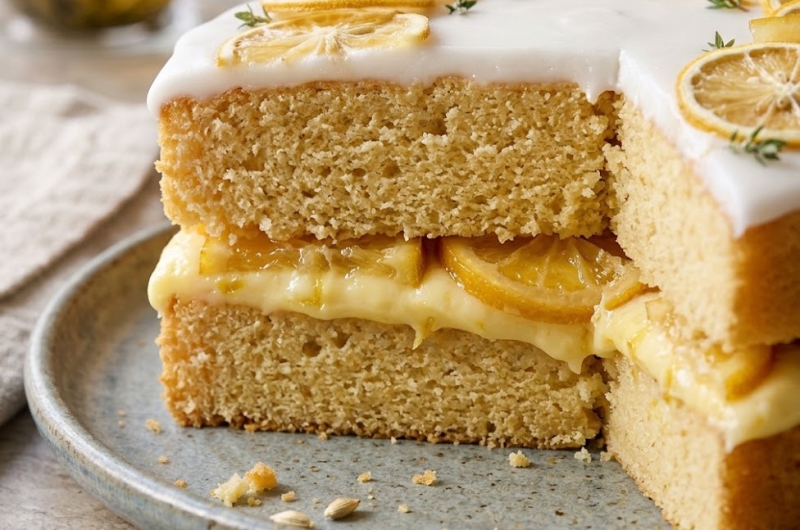
Lemon Victoria Sponge
Course: DessertCuisine: BritishDifficulty: Easy4
servings30
minutes40
minutes300
kcal1
hour10
minutesA Mary Berry-inspired lemon Victoria sponge with soft, buttery layers, tangy lemon curd and freshly whipped cream.
Ingredients
225g unsalted butter, softened, plus extra for greasing
225g caster sugar
4 large eggs, at room temperature
225g self-raising flour
1 teaspoon baking powder
Finely grated zest of 2 unwaxed lemons
2 tablespoons milk
150ml double cream, chilled
1 tablespoon icing sugar, plus 1 teaspoon for dusting
4 tablespoons lemon curd
Directions
- Preheat the oven to 180°C conventional or 160°C fan. Grease two 20cm round sandwich tins and line the bases with baking parchment.
- Beat the butter, caster sugar, eggs, flour, baking powder, lemon zest and milk in a large bowl for 1 to 2 minutes, until smooth and combined.
- Divide the batter evenly between the tins and level the tops.
- Bake for 20 to 25 minutes, until golden and springy and a skewer inserted into the centre comes out clean.
- Cool in the tins for 5 minutes, then turn out onto a wire rack, remove the parchment and cool completely.
- Whip the chilled double cream with 1 tablespoon icing sugar until it forms soft peaks.
- Spread the lemon curd over one sponge, leaving a small border, then spoon over the whipped cream. Add the second sponge and dust with 1 teaspoon icing sugar.
Notes
- Use softened butter and room-temperature eggs for a smooth batter.
- Cool the sponges completely before adding the cream.
- Refrigerate the assembled cake for up to 2 days.
- Freeze unfilled sponge layers for up to 3 months.